Recent Reports on U.S. Workforce, Education, and Student Well-Being
(Nov 2024–May 2025)
APRIL 2025
America’s Labor Shortage
U.S. Chamber of Commerce
The Chamber’s analysis Understanding America’s Labor Shortage notes that labor force participation remains below pre-pandemic levels, with 1.7 million fewer Americans in the workforce than in Feb 2020, contributing to worker shortages nationwide. Businesses of all sizes, in almost every industry and state, report severe challenges finding enough workers to fill open jobs. The report provides up-to-date data on job openings, quit rates, and labor force trends, highlighting the broad scope of U.S. labor shortages.
Historic workforce shortages in U.S. manufacturing
ARM Institute & Deloitte – Manufacturing Skills Report
A new advanced manufacturing workforce study (by the DoD-supported ARM Institute with Deloitte Consulting) underscores the historic workforce shortages in U.S. manufacturing and the urgency of upskilling workers for emerging technologies. The Labor Market & Skills for Manufacturing report finds sizable skills gaps in areas like software and robotics. For example, across all regions there is a significant deficit of tech talent – an additional 530,000 software developers will be needed by 2033 to support advanced manufacturing growth. The report provides regional insights and recommends investing in training pipelines for AI, robotics, and other high-tech skills to ensure the manufacturing sector can meet future demand.
Importance of “durable skills” like adaptability, problem-solving and critical thinking
Quinnipiac University/AACSB/Deloitte
A joint report “Closing the Skills Gap with Dynamic Partnerships” (Feb 20, 2025) finds a persistent misalignmentbetween college curricula and workforce needs. Rapid technological change is outpacing traditional education-to-employment pathways. The study highlights the importance of “durable skills” like adaptability, problem-solving and critical thinking, noting that workforce preparation can no longer focus only on technical know-how. It calls for deeper university–industry collaboration to keep programs agile. Employers should share emerging skills needs with educators, while universities create more flexible, work-integrated learning opportunities. The report’s key message is that strengthening partnerships between higher education and employers is essential to ensure graduates are truly job-ready
Earlier career exposure, skills-based learning, and education–industry collaboration are urgently needed to prepare students for the modern workforce.
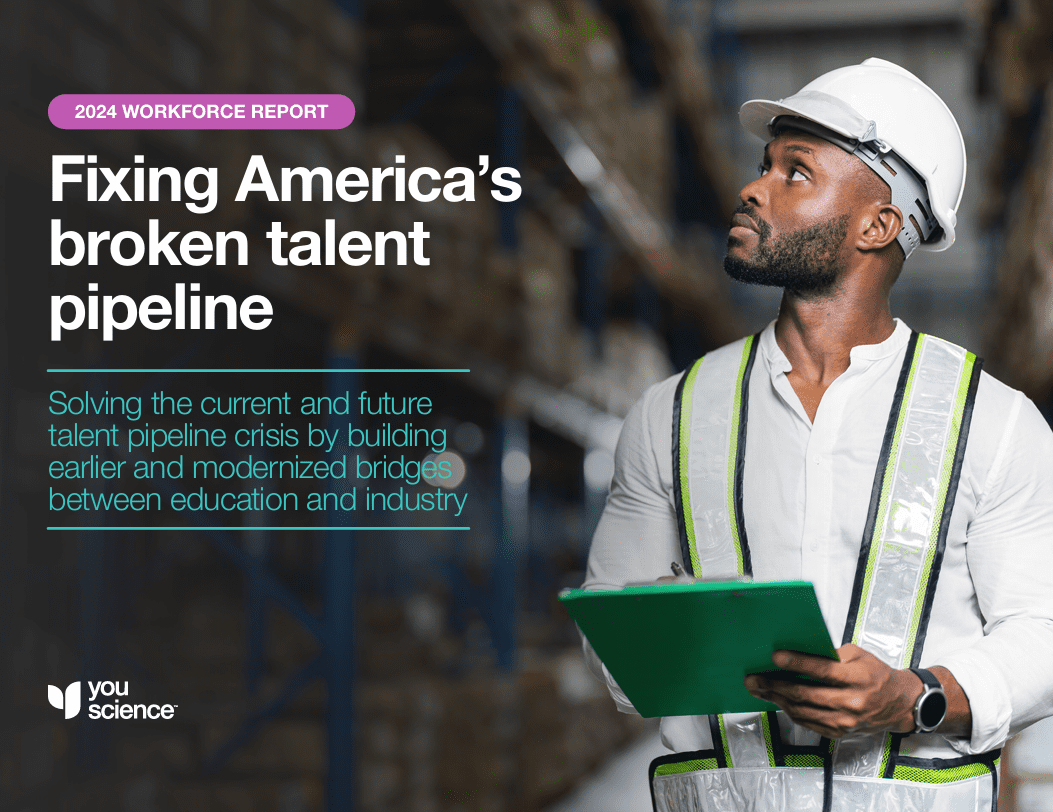
YouScience “2024 Workforce Report”
This report (based on a fall 2024 survey of 500 HR professionals) warns of a “broken talent pipeline” and urges revamping K–12 curricula to better align with industry needs. Fully 90% of employers surveyed believe stronger partnerships with schools (K-12 and postsecondary) are critical for building the talent pipeline. Employers call for integrating more work-based learning programs and industry-recognized certifications into school curricula to equip students with in-demand skills. With over 8 million U.S. job openings going unfilled and a large skills gap, the report argues that earlier career exposure, skills-based learning, and education–industry collaboration are urgently needed to prepare students for the modern workforce.
69% of recent graduates wish their college had worked more closely with employers to provide hands-on learning.
Cengage/Lumina Foundation – Graduate Employability Report 2024
This national survey-based report (late 2024) examines how well colleges are preparing students for jobs. It finds some improvement in career preparation, but also clear student demand for more alignment with market needs. Notably, 69% of recent graduates wish their college had worked more closely with employers to provide hands-on learning, and 60% want access to shorter programs like micro-credentials. While a growing share of graduates feel they gained job-relevant skills, many still feel underprepared in transitioning to the workplace. The report suggests that aligning curricula with employer needs – through internships, cooperative education, and curriculum co-design with industry – would help close skills gaps and boost graduates’ job readiness and confidence. In short, educators should continue shifting toward skills-focused instruction and employer partnerships to meet current and future job market demands.
Call to take urgent action to build students’ cognitive stamina and emotional resilience
Future of Education Report 2025
This North America-focused report warns of a “resilience crisis” among students in the era of TikTok and instant gratification. It finds that today’s youth struggle to persevere through challenges, as constant digital stimuli erode their attention span and grit. According to the report’s findings, over 70% of educators say their students can’t concentrate for more than 10 minutes at a stretch, and students who consume a lot of short-form video (2+ hours daily) perform significantly worse on tasks requiring sustained critical thinking. Such trends threaten deeper learning and eventual workplace success. The Future of Education Report 2025 calls on educators and parents to take urgent action to build students’ cognitive stamina and emotional resilience. It outlines practical strategies – from curriculum redesign (to incorporate focus training and project-based learning) and classroom mindfulness exercises, to “digital wellness” practices at home – all aimed at rebuilding students’ capacity to focus, cope with stress, and “bounce back” from setbacks. Notably, schools that implemented structured resilience-building programs saw marked improvements in student persistence and emotional regulation. This report underscores that prioritizing mental fitness (much like physical fitness) in education is crucial to prepare well-rounded, resilient future workers.
Prevalence and Early Identification of Autism Spectrum Disorder
Morbidity and Mortality Weekly Report (MMWR)
Increased identification of autism, particularly among very young children and previously underidentified groups, underscores the increased demand and ongoing need for enhanced planning to provide equitable diagnostic, treatment, and support services for all children with ASD. The substantial variability in ASD identification across sites suggests opportunities to identify and implement successful strategies and practices in communities to ensure all children with ASD reach their potential.